Overview: what this AI agent does
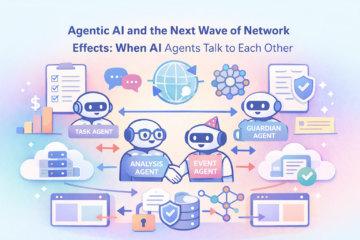
A Founder/CEO Profit Agent is an AI autonomous agent that helps leadership improve profitability by turning financial and operational data into clear margin insights and action-ready decisions. It monitors revenue, costs, unit economics, and pricing/discounting patterns, then highlights where profit is being made—or leaking—across products, customers, channels, and cohorts. The agent supports better profit decisions by automating analysis, surfacing early warnings, and coordinating follow-up actions across finance, sales, and operations.
Typical workflows it automates (examples)
- Profit dashboarding (gross margin, contribution margin, EBITDA proxies, unit economics by segment)
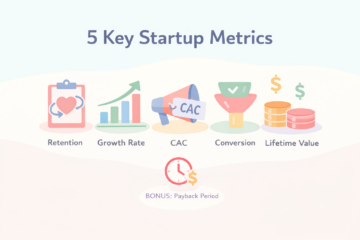
- Unit economics tracking (CAC, LTV, payback period, retention, churn, cohort profitability)
- Pricing and discount analysis (discount leakage, approval thresholds, price-volume-mix insights)
- Cost variance monitoring (spend anomalies, vendor changes, COGS drivers, overhead drift)
- Margin-by-customer/product/channel (profitability maps, loss-making accounts alerts, mix shifts)
- Forecasting & scenarios (margin sensitivity, headcount impact, pricing changes, volume shifts)
- Cash-to-profit alignment (profit vs cash conversion, AR/AP timing impacts, runway implications)
- Profit improvement playbooks (identify levers: pricing, packaging, procurement, churn reduction, efficiency)
- Board/investor profit narratives (monthly packs, KPI commentary, drivers and corrective actions)
- Cross-functional action tracking (owners, deadlines, expected impact, and realised savings)
The tools and data it typically integrates with
A Profit Agent becomes most valuable when connected to the systems that represent revenue, cost, and delivery:
- Accounting/ERP: QuickBooks, Xero, NetSuite, Sage, Dynamics; GL, COGS, AP/AR, budgets
- Billing & subscriptions: Stripe, Chargebee, Recurly; MRR/ARR, churn, upgrades, invoices
- CRM & revenue ops: Salesforce, HubSpot; pipeline, renewals, discounts, deal terms
- Product analytics: Amplitude, Mixpanel, Pendo; usage cohorts, retention signals, feature adoption
- Payments & banking: bank feeds, cash accounts, payment processors; reconciliation and cash position
- Spend management: Ramp/Brex/corporate cards, Bill.com; vendor spend, categories, approvals
- Data & BI: warehouses + Power BI/Tableau/Looker; profitability models, segmentation, dashboards
- Contracts & pricing policies: pricing lists, discount rules, approvals matrices, customer agreements
Human-in-the-loop governance (how you stay in control)
Human oversight ensures profit recommendations are context-aware and aligned with strategy. Leaders define the profit model (what counts as COGS vs opex, margin definitions, allocation rules), and the agent automates analysis within those guardrails. Approval gates can apply to sensitive actions—such as pricing changes, discount exceptions, vendor contract renegotiations, or cost-cut programs—so humans validate trade-offs (growth vs. margin, customer impact, brand risk) before execution.
Quality is maintained through transparency, review cycles, and auditability. The agent can show the drivers behind each recommendation (price-volume-mix, cost components, cohort behaviour) and link back to source data so finance can verify accuracy. Regular sampling and month-end reconciliation help refine allocation assumptions and prevent “false precision,” ensuring the agent remains reliable as the business model, pricing, and costs evolve.
Conclusion
For startups and SMEs, a Founder/CEO Profit Agent creates leverage by making profitability visible, actionable, and continuously managed—not just reviewed at month-end. It helps leaders spot margin leakage early, prioritise the highest-impact profit levers, and align teams around measurable improvements. With humans controlling strategy and approvals, the agent accelerates profitable growth while strengthening financial discipline and decision confidence.