A Digital Product Manager (SaaS) owns the vision, strategy, and lifecycle of a cloud-based product, ensuring it delivers ongoing value to customers and recurring revenue to the business. They sit at the intersection of customers, engineering, design, sales, and marketing—translating customer needs and market insights into clear roadmaps, prioritising features, and guiding cross-functional teams to ship, iterate, and scale. They’re responsible for the whole SaaS funnel: from onboarding and in-app experience to pricing, retention, expansion, and usage analytics, always balancing user value, technical feasibility, and commercial outcomes.
Why In Demand
- Shift to subscription & recurring revenue models – As more businesses adopt SaaS and product-led growth, companies need PMs who understand conversion, retention, and expansion, not just one-off sales.
- Constant need to differentiate in crowded SaaS markets – They drive discovery, prioritisation, and rapid iteration so products keep solving real problems better than competitors.
- Data-rich, experiment-driven environments – SaaS products generate detailed usage data; PMs who can turn this into insights, A/B tests, and roadmap decisions are crucial for continuous optimisation.
- Cross-functional coordination in digital organisations – SaaS success depends on tight alignment across product, engineering, CS, sales, and marketing—precisely the coordination a strong Digital PM provides.
- Ongoing evolution of customer expectations – As users demand seamless UX, integrations, and AI-enabled workflows, SaaS PMs are essential to steer the product to stay relevant, sticky, and scalable.
Problems Solved
Digital Product Managers in SaaS solve the problem of turning a cloud product from “something we built” into “a service customers rely on and happily pay for every month.” Without them, teams often ship features that don’t fit real customer needs, growth is lumpy, onboarding is confusing, churn is high, and no one clearly owns the end-to-end experience. A SaaS PM brings clarity and focus: they define who the product is for, what problems it solves, how success is measured, and which improvements matter most, coordinating engineering, design, sales, and customer success around a shared roadmap.
How a Digital Product Manager (SaaS) addresses these problems and delivers value
- Aligns product with real customer problems – Talks to users, analyses feedback and usage data, and turns insights into clear problem statements and features that actually reduce pain and create value.
- Owns the full SaaS lifecycle – Optimises acquisition, onboarding, activation, engagement, and retention so that customers not only sign up but stay, adopt more features, and expand over time.
- Prioritises what really moves the needle – Uses data, experiments, and input from go-to-market teams to decide which features, UX improvements, and integrations deliver the highest impact for effort.
- Coordinates cross-functional execution – Keeps engineering, design, marketing, sales, and customer success aligned on common goals and a shared roadmap, reducing friction, rework, and time-to-market.
- Turns product usage into business outcomes – Connects usage metrics (adoption, retention, NPS) to commercial outcomes (MRR, churn, expansion), ensuring the product consistently supports revenue growth.
- Drives continuous improvement & differentiation – Runs ongoing discovery and experimentation to refine UX, pricing, and capabilities so the SaaS stays competitive and increasingly valuable in a crowded market.
Skills Needed
| Skill Category | Skills (with importance /10) |
|---|---|
| Technical | Web/app architecture basics (7), API & integration basics (8), Read simple JSON/SQL (6), No-code/low-code prototyping (4), Regular hands-on coding in prod (2) |
| Digital & Data | Product analytics tools (GA, Amplitude, etc.) (10), Event tracking & taxonomy design (9), Experimentation platforms (A/B tools) (8), CRM/marketing automation basics (6), Data warehouse/ETL design (3) |
| Problem-Solving | Framing clear customer problems (10), Hypothesis-driven thinking (9), Using prioritisation frameworks (RICE/ICE) (9), Systems thinking across user funnel (8), Root-cause analysis of churn/drop-off (7) |
| Analytics | Defining north-star & sub-metrics (10), Funnel & cohort analysis (9), Revenue/churn metric analysis (8), SQL/spreadsheet deep dives (7), Advanced statistics/modelling (4) |
| Communication | Writing clear PRDs/user stories (10), Storytelling with data & insight (9), Communicating roadmap & trade-offs (9), Crisp async comms (Slack/email/docs) (8), Public speaking/media content (3) |
| Collaboration | Working with engineering & design (10), Partnering with sales, CS & marketing (9), Facilitating cross-functional workshops (8), Cross-timezone/remote collaboration (7), Conflict mediation within teams (6) |
| Leadership | Owning outcomes, not just features (10), Influencing without formal authority (9), Decisions under uncertainty (9), Coaching team in product thinking (7), Formal line management duties (5) |
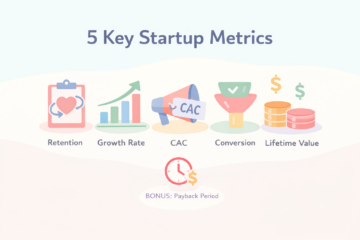
| Business | Understanding SaaS economics (CAC/LTV) (10), Pricing & packaging basics (8), Building feature/business cases (8), Reading P&L and key reports (7), Advanced corporate finance skills (3) |
| Strategic | Defining product vision for SaaS (10), Building roadmap & themes (9), Balancing short-term vs long-term bets (9), Market & competitor scanning (7), M&A / portfolio strategy input (2) |
| Customers | Deep user empathy & JTBD focus (10), Running customer interviews/discovery (9), Journey mapping & pain-point mapping (8), Persona & segment clarity (7), Running big user councils/events (4) |
| Stakeholders | Managing exec expectations on product (10), Leading prioritisation/alignment sessions (9), Transparent status & risk updates (8), Negotiating scope/time/cost trade-offs (8), Handling board-level Q&A (5) |
| Adaptability | Learning new tools & domains fast (9), Pivoting roadmap based on evidence (9), Comfort with ambiguity & change (9), Personal resilience under pressure (8) |
| Governance | Data privacy & consent awareness (GDPR, etc.) (8), Avoiding dark patterns in UX (7), Working with legal/compliance on changes (7), Keeping decision logs & docs up-to-date (6), Drafting detailed legal terms yourself (2) |