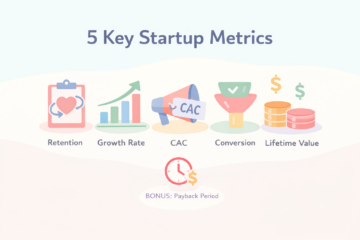
A Growth Product Manager (Growth PM) is responsible for systematically increasing a product’s key metrics—such as acquisition, activation, engagement, retention, and revenue—through experimentation, product changes, and data-driven decision making. They sit at the intersection of product, marketing, data, and engineering, identifying where users drop off in the funnel, hypothesising solutions, running A/B tests, and iterating quickly on onboarding flows, pricing, paywalls, notifications, referrals and more. Rather than owning a specific feature area, they own growth outcomes, using a mix of product design, psychology, analytics, and experimentation to unlock sustainable, compounding growth.
Why in demand
Rising pressure for efficient, sustainable growth – As capital becomes more disciplined, companies need Growth PMs who can drive revenue and engagement without relying solely on big marketing spends.
Shift to product-led growth (PLG) – More businesses are using the product itself to acquire and convert customers, making specialists who optimise funnels and in-product journeys critical.
Explosion of data & experimentation tooling – With better analytics and A/B testing platforms, organisations need Growth PMs who can turn data and experiments into actionable product decisions.
Complex multi-channel customer journeys – As users move across web, mobile, and partner ecosystems, Growth PMs are needed to design coherent, optimised experiences across the full lifecycle.
Need for cross-functional growth ownership – Growth PMs align product, marketing, sales, data, and design around a shared growth model and metrics, reducing silos and maximising impact from every initiative.
Problems Solved
Growth Product Managers solve the problem of “we have a product, but growth is flat or unpredictable.” Many companies acquire users who never activate, churn quickly, don’t convert to paid, or don’t expand their usage—despite big spends on marketing and feature development. Growth PMs focus on the entire lifecycle (acquisition → activation → engagement → retention → revenue), use data to identify drop-offs and friction points, and run rapid experiments to fix them. They bring structure to growth: clear hypotheses, A/B tests, and prioritised backlogs that turn guesswork into a repeatable growth machine.
How Growth Product Managers address these problems and create value
- Find and fix funnel leaks – They map acquisition and product funnels, identify where users drop off, and prioritise experiments (e.g. onboarding tweaks, new nudges, better empty states) to improve activation and conversion.
- Turn data into systematic experimentation – They use analytics to generate hypotheses, design A/B tests, and interpret results, turning insights into shipping changes that steadily lift key metrics (signup rate, ARPU, LTV).
- Align teams around growth goals – They create a shared growth model and KPIs that product, marketing, sales, and data all work towards, reducing siloed efforts and focusing everyone on the same outcomes.
- Improve retention and monetisation – They test features, pricing, paywalls, upsells, and engagement loops (emails, in-app messages, referrals) that keep users coming back and increase revenue per user.
- Accelerate learning and reduce waste – They favour small, fast experiments over big, slow bets, so the organisation learns quicker what works. It stops investing in ideas that don’t move the needle.
- Build a repeatable growth engine – They formalise playbooks, processes, and dashboards for growth, making success less dependent on individual heroes and more on a scalable, measurable system.
Skills Needed
| Skill Category | Skills (with importance /10) |
|---|---|
| Technical | Web/app architecture basics (6), API & integration basics (6), Understanding tracking/SDK implementation constraints (7), Basic HTML/CSS/JS literacy (4), Regular hands-on coding in production (2) |
| Digital & Data | Mastery of product analytics tools (GA, Amplitude, Mixpanel) (10), Event schema & tracking design (9), Experimentation platform usage (A/B tools, flags) (9), CRM & lifecycle tooling awareness (email, push, in-app) (7), Deep data engineering / ETL build skills (2) |
| Problem-Solving | Framing funnel problems into clear hypotheses (10), Turning vague growth goals into testable ideas (9), Using prioritisation frameworks (RICE/ICE) (9), Diagnosing funnel leaks & drop-offs (8), Heavy-duty optimisation maths/operations research (2) |
| Analytics | Defining north-star & input metrics (10), Funnel, cohort & retention analysis (10), Understanding CAC, LTV, payback & unit economics (9), Reading A/B test results & significance (8), Advanced statistics/modelling yourself (4) |
| Communication | Writing crisp experiment briefs & debriefs (10), Storytelling with data for non-technical audiences (9), Clear roadmap & trade-off communication (9), Crafting compelling growth copy/CTAs (7), Public talks/podcasts on growth (3) |
| Collaboration | Working tightly with engineering & design (10), Partnering with marketing, sales & CS on growth motions (9), Facilitating cross-functional growth rituals (growth meetings, ideation) (8), Coordinating multi-channel experiments (8), Deep hands-on campaign ops execution (4) |
| Leadership | Owning growth outcomes, not just feature delivery (10), Influencing without authority across teams (9), Enforcing a disciplined experiment culture (9), Coaching others on growth mindset & methods (7), Formal people management of a big org (4) |
| Business | Understanding revenue model & pricing levers (9), Interpreting P&L impact of growth initiatives (8), Estimating ROI of experiments & bets (8), Awareness of costs across channels & tactics (7), Advanced corporate finance/valuation work (3) |
| Strategic | Designing an overall growth model (AARRR, loops) (10), Choosing focus across acquisition/activation/retention/monetisation (9), Balancing quick wins with compounding growth bets (9), Scanning and testing new channels & platforms (7), Leading long-term corporate strategy outside product (2) |
| Customers | Learning new tools, channels & tactics quickly (9), Pivoting strategy based on data & market shifts (9), Comfort with failed experiments & ambiguity (10), Switching between detail and big-picture easily (8), Job-hopping to chase “shiny objects” (1) |
| Stakeholders | Aligning execs on growth goals & risks (9), Managing expectations on experiment timelines & uncertainty (9), Communicating wins, losses & learnings transparently (9), Negotiating resources & priorities across teams (8), Frequent board-level pitching as primary owner (4) |
| Adaptability | Learning new tools, channels & tactics quickly (9), Pivoting strategy based on data & market shifts (9), Comfort with failed experiments & ambiguity (10), Switching between detail and big-picture easily (8) |
| Governance | Deep user empathy & behaviour understanding (9), Qualitative discovery (interviews, usability, surveys) (8), Mapping journeys & identifying friction points (8), Translating insights into specific growth tests (8), Running significant customer councils/events (3) |