Introduction & what you’ll get from this blog
This is a practical, no-fluff guide to craft (and deliver) a pitch deck that gets attention from angels, seed funds, accelerators, and VCs. You’ll learn the investor-first structure, the common failure points, and the talk-track that turns a one-way demo into a two-way conversation. Your goal: cover the essentials in 5–10 minutes, leaving ample time for discussion—because investors convince themselves when they’re the ones doing the talking. Order your most impressive points early, keep language simple, and use your slides as prompts, not scripts.
Why getting investor attention is hard
Angel groups and early-stage investors triage at scale. It’s common for a screener to receive 100+ applications per cycle and eliminate most in minutes, often without feedback—so clears, not maybes, move forward. “Ghosting” isn’t personal; it’s throughput. Fit to the published thesis, completeness of materials, and venture-scale potential are the first tests.
Three make-or-break moments:
- Early screening (parallel): If you don’t meet the group’s criteria (e.g., geography, stage, corporate form) or you leave out the basics (deck, raise size, founder info, entity), you’re dropped before a meeting.
- The pitch (live): Clarity in the first minute matters most; if they still don’t know what you do after slide one, everything else lands flat. Keep it investor-friendly, not customer-jargony.
- Follow-up to close: Investors expect a crisp ask, milestones for the capital, and timely follow-ups. Many founders never actually ask for the money, which kills otherwise interested deals.
Primary mistakes that quietly kill pitches (and why they cost you)
Unclear “What do you do?” If an investor can’t repeat your business in two sentences + a specific example, they won’t fund you. Use simple, investor-oriented language; 80% accurate and 100% clear beats 100% accurate and 50% clear.
Treating the pitch like a monologue. Great pitches become conversations. Watch for interest, jump to the relevant slide, and aim to have the investor talk ~50% of the time.
Distracting or “designed” slides. Pretty slides draw attention away from you. Keep visuals boring and clear so the focus stays on the argument and metrics.
Weak traction narrative. Traction is momentum over time. State what you achieved and how long it took. Don’t show a chart unless it goes up-and-to-the-right; skip the slide rather than pad with “fake work.”
No ask (or a vague one). You must state the round size and the specific 12–18-month usage/revenue milestones the capital unlocks. Social proof helps (“committed/in-discussion” checks).
Ignoring the business model. Angels invest in businesses, not features. If customer acquisition, pricing, retention, margins, and scalability are fuzzy, you’re out.
No defensibility. If success invites easy copycats and you lack a moat (e.g., network effects, switching costs, IP, speed to scale), investors expect you to be crushed.
Incomplete or off-thesis applications. Missing basics (deck, founder bios, incorporation details) or applying to groups that won’t fund your category/location wastes your shot—wrong vehicle or valuation. Many angels won’t touch non-C-Corps, and pre-seed valuations that are wildly high (or comically low) are instant passes.
A simple, investor-first pitch deck framework (deliver in 5–10 minutes)
Slide 1 — One-liner (2 sentences) + specific example
Say what you do in plain English and ground it with a vivid scenario. If your investors aren’t your users, use an investor version of your one-liner (not your homepage copy).
Slide 2 — Problem (why now)
State the painful, urgent, and frequent problem with a quick story or fact. Keep it specific.
Slide 3 — Solution / Product snapshot
Show how it works in 30–45 seconds. No deep demo—just enough to make the following slides legible.
Slide 4 — Unique insight
What non-obvious lesson did you learned from users/market that others miss (use facts/numbers)? Example: handling payments solved trust friction in early marketplaces.
Slide 5 — Market (bottom-up math)
Teach the investor your market by showing how many users × price, with comps that justify pricing. Show the math; don’t quote giant top-down reports.
Slide 6 — Business model & unit economics
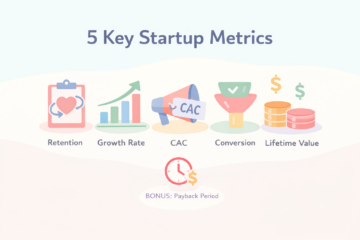
Acquisition channel(s), conversion, pricing, gross margin, payback, retention/churn. Prove you can acquire and keep customers profitably.
Slide 7 — Traction (with time)
Milestones achieved and in what timeframe (e.g., “From testflight to 1k MAU in 6 weeks”). If the graph isn’t compelling, narrate momentum instead—or omit the slide.
Slide 8 — Go-to-market
The repeatable path you’re scaling now (not a wish list). Who, how, and what triggers expansion.
Slide 9 — Competition & moat
Current alternatives, why you win, and the durable defensibility you’re building (network effects, switching costs, IP, speed).
Slide 10 — Team
Roles, standout credentials, and how you’ve personally felt the problem (no life stories; highlight the one or two “wow” facts). Clarify who is CEO/who codes.
Slide 11 — The Ask
Round size, instrument, and the measurable milestones 12–18 months out (revenue or usage). Include any committed capital and target close. Explicitly ask for participation.
Slide 12 — Appendix (for Q&A)
Extra detail you can jump to when interest spikes. Re-order live to follow investor curiosity—earn the next two minutes by leaning into what they care about.
Delivery tips for the whole deck
- Aim for ~30–45 seconds per core slide.
- Keep slides visually boring and legible; you are the story.
- Put your most impressive proof (team/traction) right after the one-liner—don’t “save it for later.”
Extra guidelines that boost your odds (especially with angels)
Make it a conversation:
Ask quick checks (“Want a concrete example?”), watch faces (especially on Zoom), and jump to slides that trigger interest. The more they talk, the closer you are to “yes.”
Investor vs. customer language:
Maintain two crisp answers to “What do you do?”—one for users, one for investors. Kill jargon unless your investor is also your user.
Fit check, first:
Scan the group’s thesis (geo, stage, sector) and entity preferences; don’t apply if you don’t fit (e.g., non-US entities to US-only angels).
Defensibility plan:
If copying you is cheap, explain how you still win (speed, networks, switching costs, IP). Investors filter out “easy to clone” plays.
Traction without revenue:
Pre-launch? Show momentum (builds, pilots, waitlist growth) with time—not vanity surveys.
The explicit ask:
Always end with: “We’re raising £X on [SAFE/Note], to reach [A, B, C milestones] in 12–18 months; £Y committed. Would you like to join for £Z?” Many founders never ask and never get funded.
Valuation sanity:
Pre-seed valuations that are wildly high (or so low you’ll be crushed by dilution) are fast passes. Calibrate to your stage and proof.
Follow-up that moves deals:
Same day: send the deck, key metrics, data room link, your ask + milestones, and 2 time slots for next steps. Keep responses tight and specific; request letters of interest or a partner meeting when appropriate.
Final thought
Winning pitches aren’t louder; they’re clearer. Open with a two-sentence “what we do,” front-load your most substantial proof, make it a conversation, and ask for a check tied to sharp, believable milestones. That’s how you get noticed—and funded.