Network Pricing Paradox: How to Ignite Explosive Network-Effect Growth and Capture Value
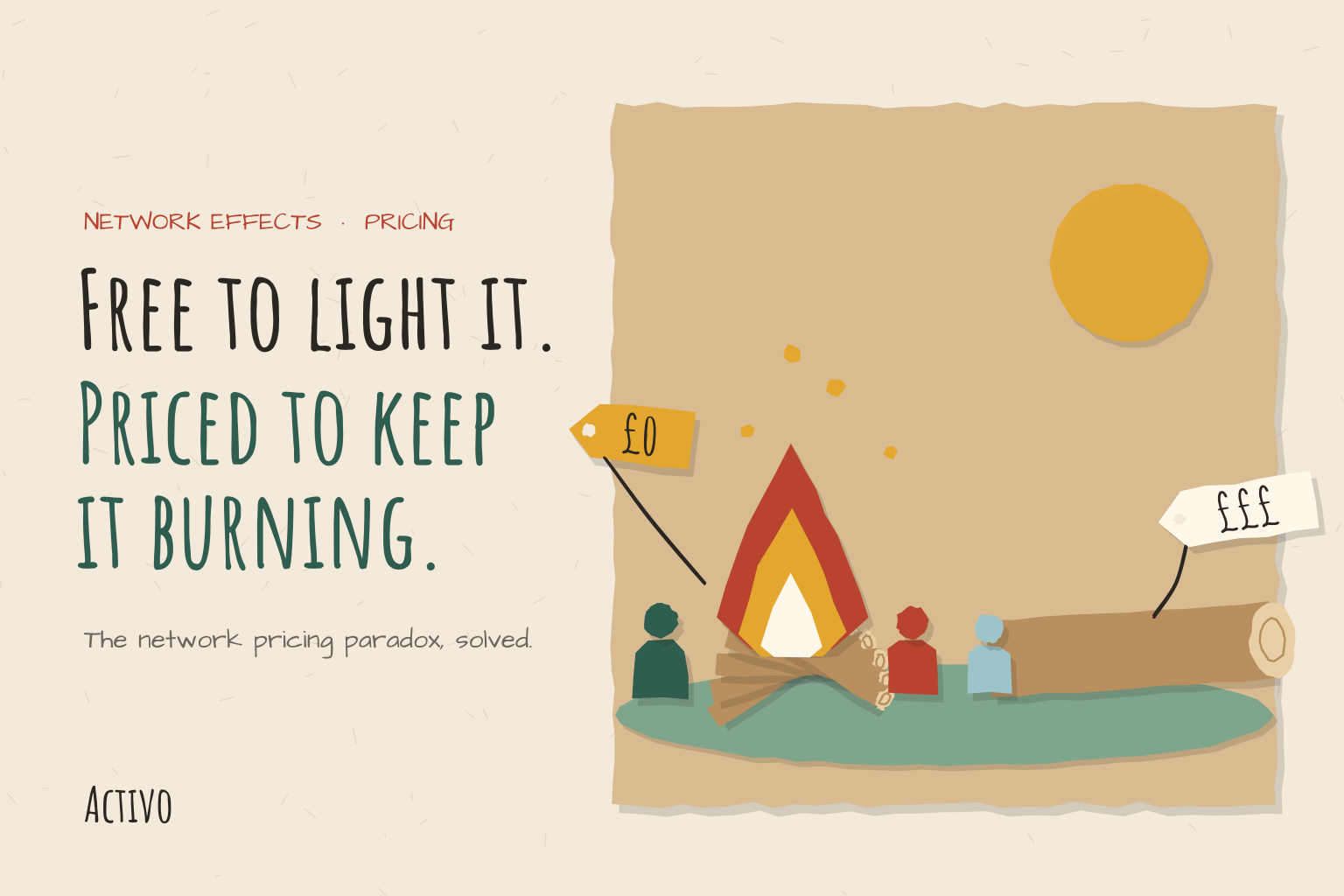
Network effects create outsized growth, but they come with a built-in pricing problem. The thing that makes a network valuable, lots of active users, is exactly what you lack at the start, so you are pushed to price at zero. Charge too early and you never reach critical mass. Never charge and the value you create leaks to users, partners or competitors. This guide shows how to light the network, how to tell when it has tipped, and which pricing models capture value without breaking it, with examples you can apply to your own startup. Updated October 2026.
The paradox in plain terms
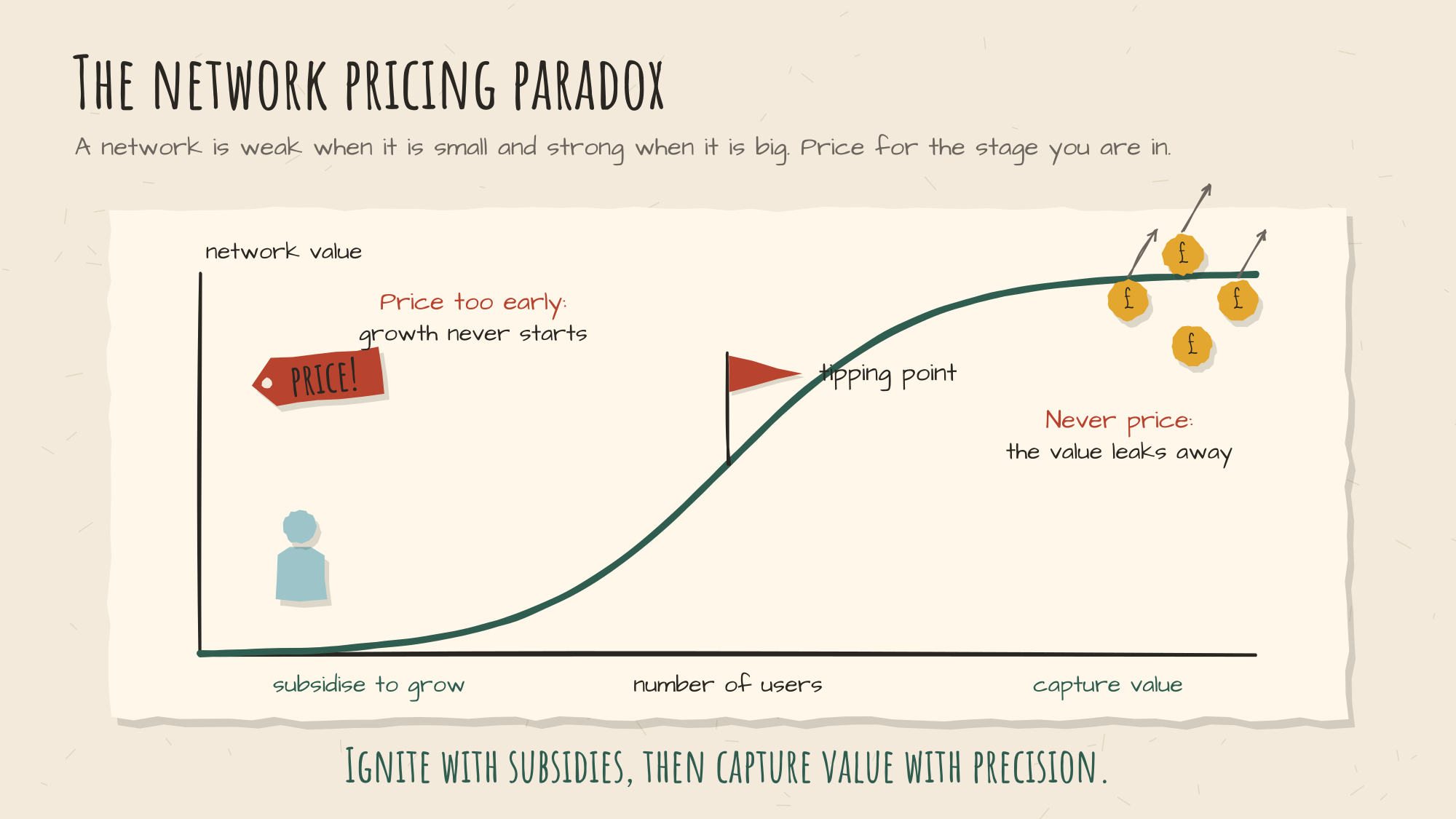
A network is weak when it is small and strong when it is big. Early on, the product may be close to useless without other users, so asking for money is a non-starter. Later, the network is worth far more than any single feature, and not charging means the value exists but your business does not capture it. The answer is not choosing growth or revenue. It is sequencing: subsidise to ignite, prove the tipping point, then charge where value is clearest and price sensitivity is lowest.
Beat the cold start: five ignition strategies
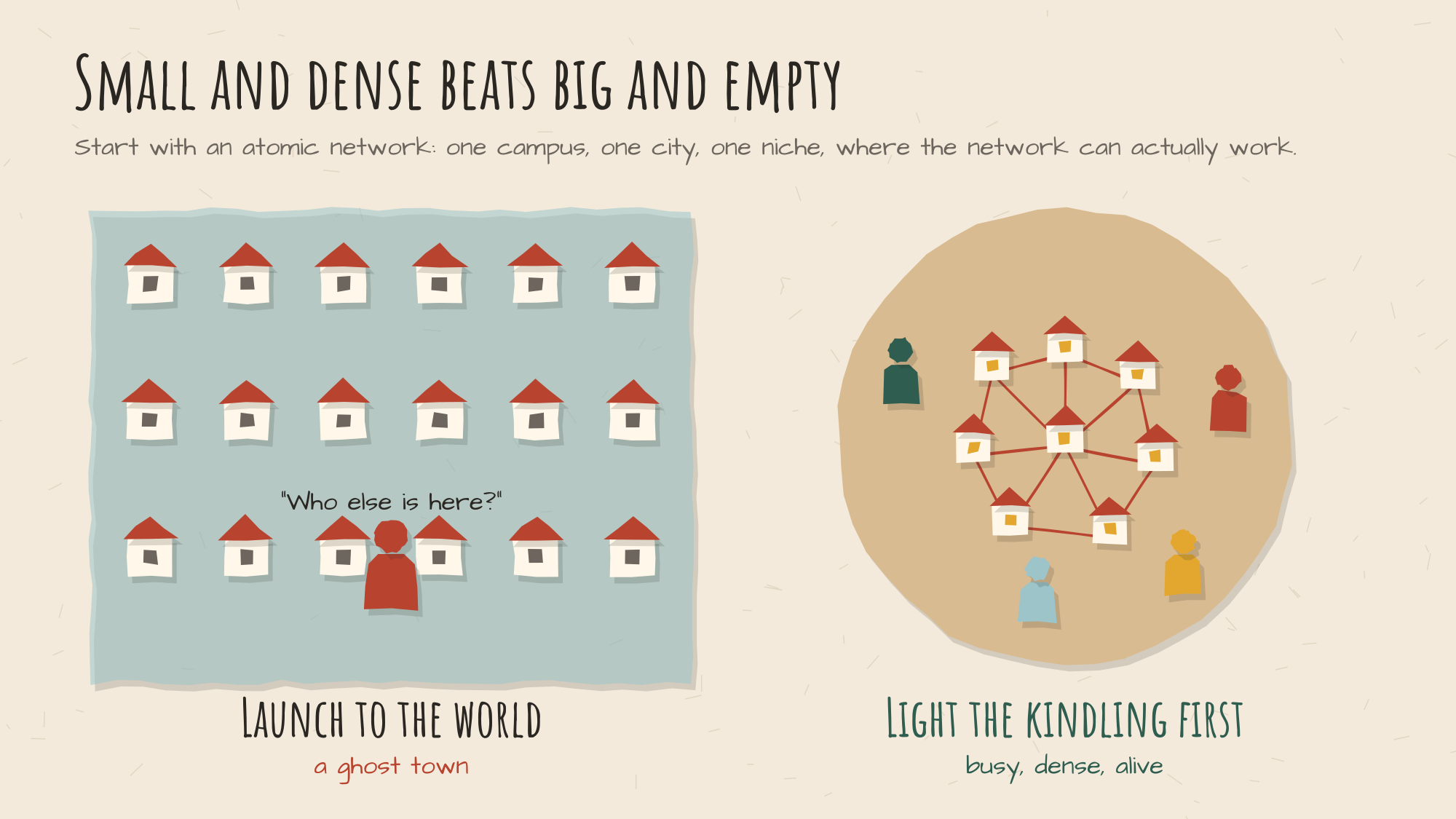
Before network effects work for you, they work against you. A new network with no users has no network value, and every visitor asks “who else is here?”. Your goal is the tipping point, where the value of joining finally exceeds the effort and cost of joining.
| Strategy | What it means | Real example | How to apply it to your startup |
|---|---|---|---|
| 1. Start with an atomic network | Win the smallest group where the network can work on its own before expanding | Facebook launched at Harvard only. Tinder seeded its first users through parties at the University of Southern California. | Pick one city, campus, industry niche or event where you can reach real density within 90 days |
| 2. Do things that do not scale | Founders power the network by hand until it runs itself | Airbnb’s founders photographed hosts’ flats in New York themselves. Reddit’s founders posted under multiple accounts so the site never looked empty. | Manually recruit, seed listings and match the first 100 transactions yourself |
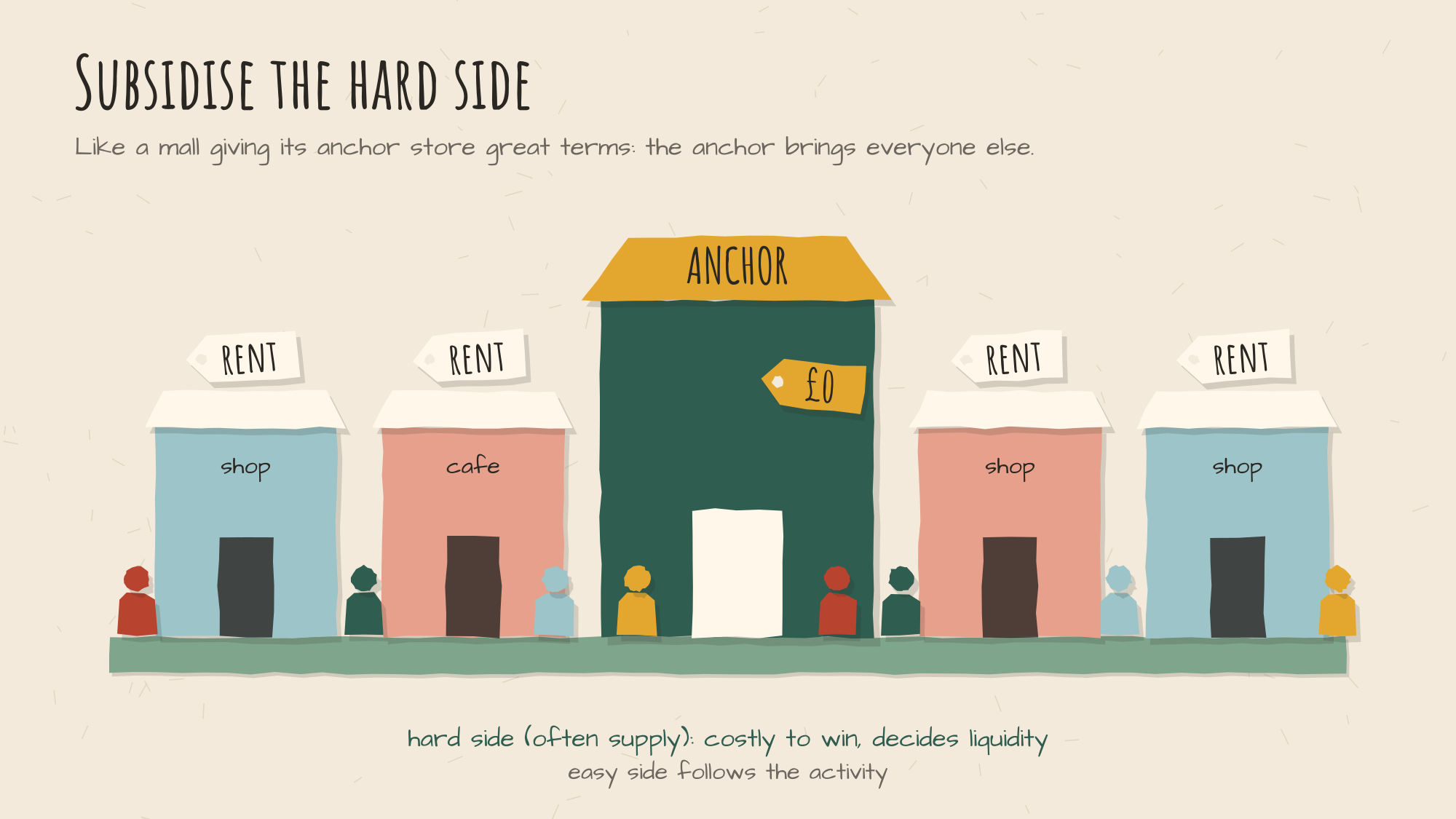
| 3. Subsidise the hard side | Pay or protect the side that is scarcer and decides whether the network has liquidity | Uber guaranteed hourly earnings for drivers when launching new cities, before rider demand was there. | Offer the hard side guaranteed demand, zero fees or free tools until utilisation is healthy |
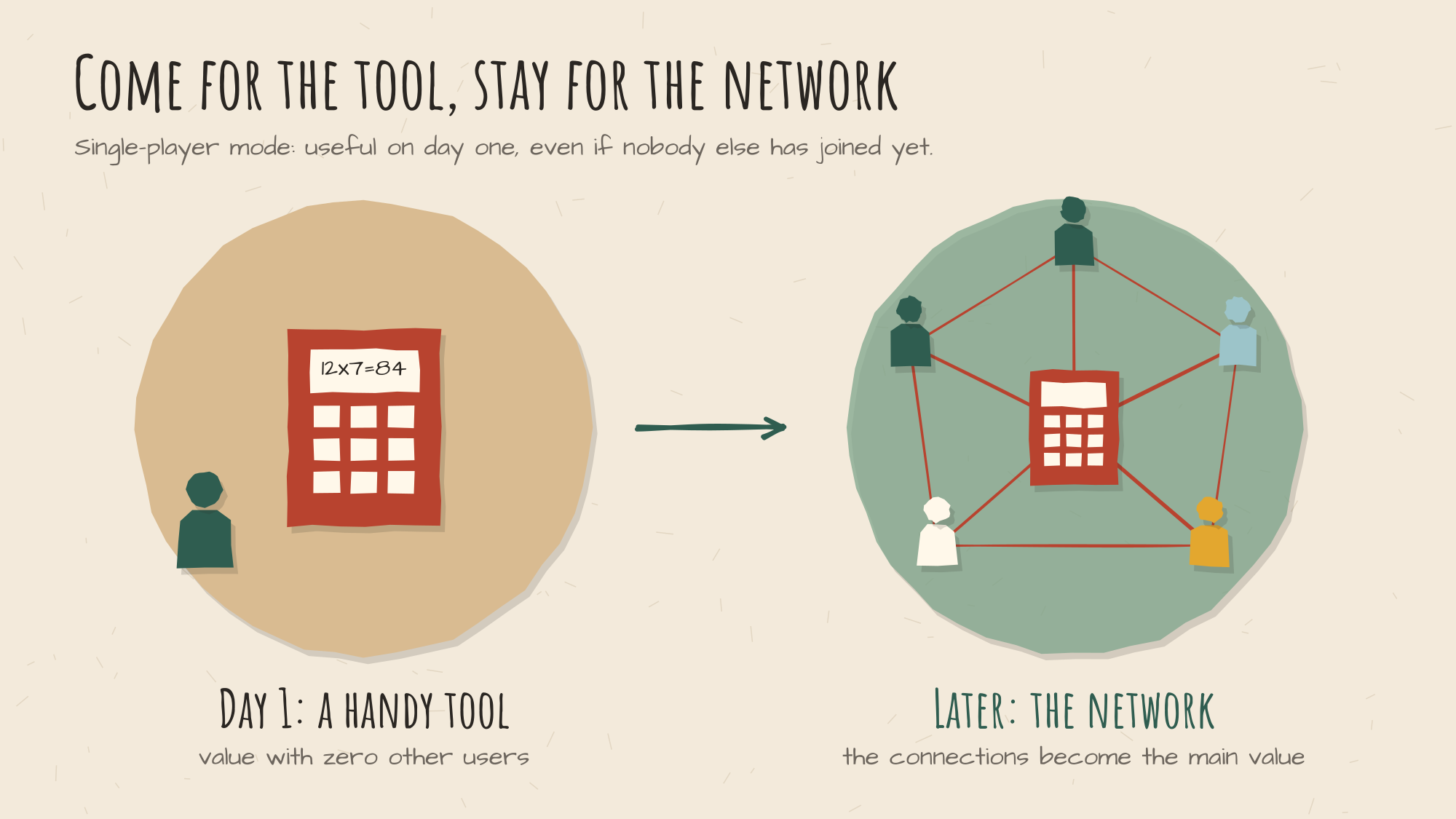
| 4. Build single-player mode | A tool that is useful alone, with the network layered on once enough people use it | OpenTable sold reservation software to restaurants first, then opened bookings to diners once enough restaurants were on it. | Ship one workflow that solves a problem for a single user today, then connect those users |
| 5. Use targeted incentives | Pay for the first critical transactions to build habit and proof | PayPal paid new users $20, later $10, to sign up and the same again for each friend they referred. | Tie referral credits to a completed transaction, not a sign-up, and cap the budget per cohort |
Find your hard side, then price around it
Two-sided networks are never symmetrical. One side is harder to acquire, more sensitive to economics and decides whether the other side has anything to find. Subsidise that side, and charge the side with clear, measurable return on what it pays.
| Network type | Usually the hard side | Subsidise with | Charge |
|---|---|---|---|
| Local services marketplace | Skilled providers | Free listings, guaranteed first jobs, scheduling tools | A booking fee or take rate once jobs flow reliably |
| Freelance or talent platform | Top-quality talent | No fees for the first months, profile promotion | Employers, per hire or by subscription |
| Creator or content platform | Creators | Audience tools, revenue shares, early payouts | Audiences and advertisers, while creators keep most of the revenue |
| App or developer platform | Developers | Free tiers, zero commission below a revenue threshold | A commission on larger developers, or the end customer |
| B2B collaboration software | The first team inside each company | A generous free plan for small teams | Admins and companies once usage spreads across departments |
| Payments or fintech network | Whichever side adopts last, often merchants or consumers | Sign-up bonuses, fee holidays, instant settlement | Per-transaction fees on the side that gains most from volume |
When to start charging: tipping-point signals
Monetisation timing is about network maturity, not revenue targets. Start shifting from subsidy to value capture when most of these signals are true, and change one side at a time.
| Signal | What to look for | Rule of thumb |
|---|---|---|
| Liquidity holds without subsidy | Match, fill or sell-through rates stay steady when you reduce incentives | No more than a 10% drop when an incentive is removed for a test cohort |
| Growth turns organic | Most new users arrive through referrals, word of mouth or search | Over half of new users without paid acquisition |
| Retention curves flatten | Cohorts stop decaying after the first few months | Month-6 retention steady across your latest three cohorts |
| Users cite the network | People join because of who else is there, not just the tool | Survey: “Would you leave if your contacts or counterparts were not here?” |
| One side has clear return | A side can measure what it earns or saves from you | That side’s value per month is at least 5× what you plan to charge |
Pricing models that capture value without killing the network
| Model | How it works | Real example | Best for | Watch out for |
|---|---|---|---|---|
| Freemium with usage limits | Free spreads the product, paid unlocks it when usage becomes critical | Zoom limits free group meetings to 40 minutes. Slack limits message history on its free plan. | Collaboration tools where invites spread use | A free tier so generous nobody upgrades |
| Asymmetric pricing | Subsidise the side that creates density, charge the side with clear return | LinkedIn is free for members and earns from recruiters, advertisers and premium subscriptions. | Two-sided networks with one clearly commercial side | Charging the hard side too early |
| Take rate or usage pricing | Revenue grows with transactions or activity on the network | Etsy charges sellers a 6.5% transaction fee on each sale. | Marketplaces and payments | Take rates high enough to push transactions off-platform |
| Threshold and cohort pricing | Small or early participants pay less, large or late ones pay more | Shopify takes nothing on a developer’s first $1m. Apple charges small developers 15% instead of 30%. | Platforms that need a long tail of builders | Complexity, and resentment at the threshold |
| Ecosystem premium | Once dominant, charge for access to the whole network | Apple’s standard 30% commission on larger developers. | Dominant networks with no close substitute | Regulatory pressure and partner backlash |
Match pricing to network maturity
| Stage | Objective | Pricing | Signal to move on | Example move |
|---|---|---|---|---|
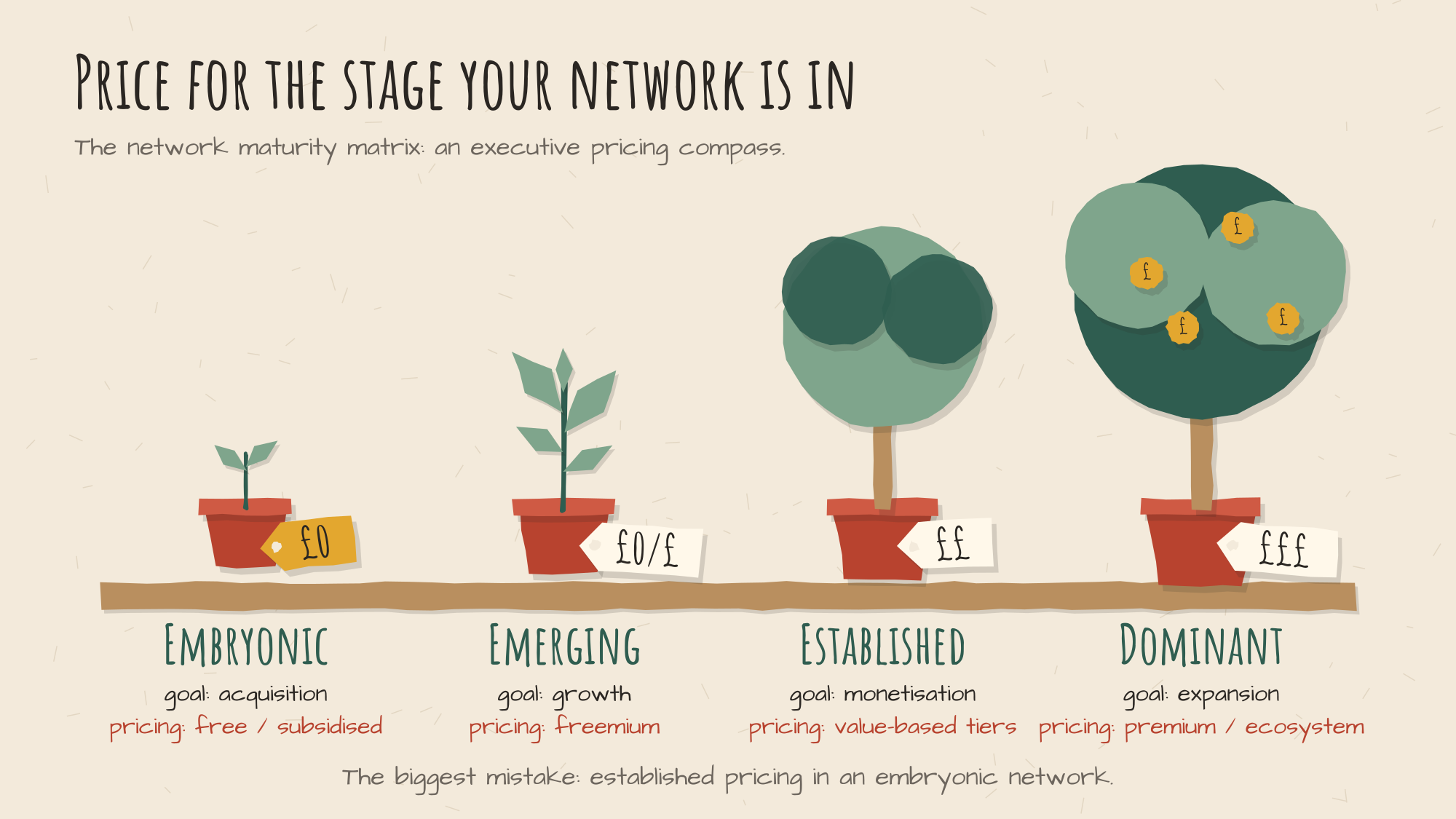
| Embryonic | Acquisition | Free or subsidised | Density in your atomic network and repeat transactions | Founders matching every transaction by hand |
| Emerging | Growth | Freemium, hard side protected | Organic growth and liquidity without incentives | Free for providers, small booking fee for customers |
| Established | Monetisation | Value-based tiers and take rates | Flat retention and a side with measurable return | Premium tier for power sellers, analytics and promotion |
| Dominant | Expansion | Premium and ecosystem fees | Users stay despite cheaper rivals | Payments, financing and advertising on top of the core |
The most common mistake is running established-stage pricing on an embryonic network. The second is staying free so long that users learn the product is worth nothing.
Worked examples for your startup
Industrial spare parts
Ignite: start with one region and one equipment type. List suppliers’ stock for them and arrange the first deals over the phone.
Price: free for suppliers until fill rates hold, then a 3–8% take rate on orders. Buyers pay nothing.
Watch: share of orders that move off-platform after the first match.
Booking software for salons
Ignite: sell scheduling and payments to salons as a standalone tool, dense in one city.
Price: a monthly subscription for the tool, then a consumer booking app that sends new clients, with a fee only on clients the network brings.
Watch: share of bookings from new clients found through the app.
Paid community or courses
Ignite: hand-pick 50 creators in one niche, help them launch, and guarantee a minimum payout for the first three months.
Price: creators keep most revenue with a 5–10% platform fee, plus paid tools for growth and analytics.
Watch: creator earnings per month and how many leave for direct billing.
API or integration marketplace
Ignite: a free tier generous enough to build and launch a real product, plus featured listings for early integrations.
Price: no commission below a revenue threshold, then usage-based or revenue-share pricing for larger partners.
Watch: integrations launched per month and how concentrated revenue is among your biggest partners.
Quick answers founders ask
| Question | Answer |
|---|---|
| When should I start charging? | When the network’s value is obvious enough that users stay as friction rises, and you can charge one side without starving liquidity. |
| Is free always required? | No. But early friction must be close to zero. If you cannot be free, offer strong single-player value, guarantees or outcomes delivered by hand. |
| What is the biggest pricing mistake? | Charging both sides too early, or charging the hard side first. It collapses supply and stalls growth. |
| How do I raise prices without a backlash? | Grandfather early users for a fixed period, add value before you add cost, and announce changes well ahead. |
Your 90-day network pricing plan
- Days 1–10: Define your atomic network. Choose the smallest segment where the network can work, and set a density target, such as 40% of salons in one district.
- Days 11–20: Identify the hard side. Interview ten people on each side. The side that is harder to win and more price-sensitive is the one you subsidise.
- Days 21–45: Ignite by hand. Seed supply, match the first 100 transactions yourself and add single-player value so early users stay even when the network is thin.
- Days 46–60: Instrument the tipping point. Track liquidity, organic share of new users, cohort retention and value per user on each side every week.
- Days 61–75: Test pricing on one side. Introduce a fee or paid tier for one cohort of the side with clear return, and watch liquidity on the other side.
- Days 76–90: Roll out with protection. Extend pricing gradually, grandfather early adopters and keep a free or threshold tier so the network keeps growing.
The winners do not choose between growth and monetisation. They sequence them: ignite with subsidies, prove the network has tipped, then capture value with precision.
Igniting network growth and pricing it right is the kind of loop our Growth Mindset work helps you design, test and scale. Explore Growth Mindset →
We help founders find their hard side, plan the move from free to paid and model take rates before they launch them.
Get in touchSources: NFX, 70% of value in tech is driven by network effects · CNBC on Shopify app store fees · Apple App Store Small Business Program · Etsy fees and payments policy · Andrew Chen, The Cold Start Problem.