The AI ecosystem is evolving
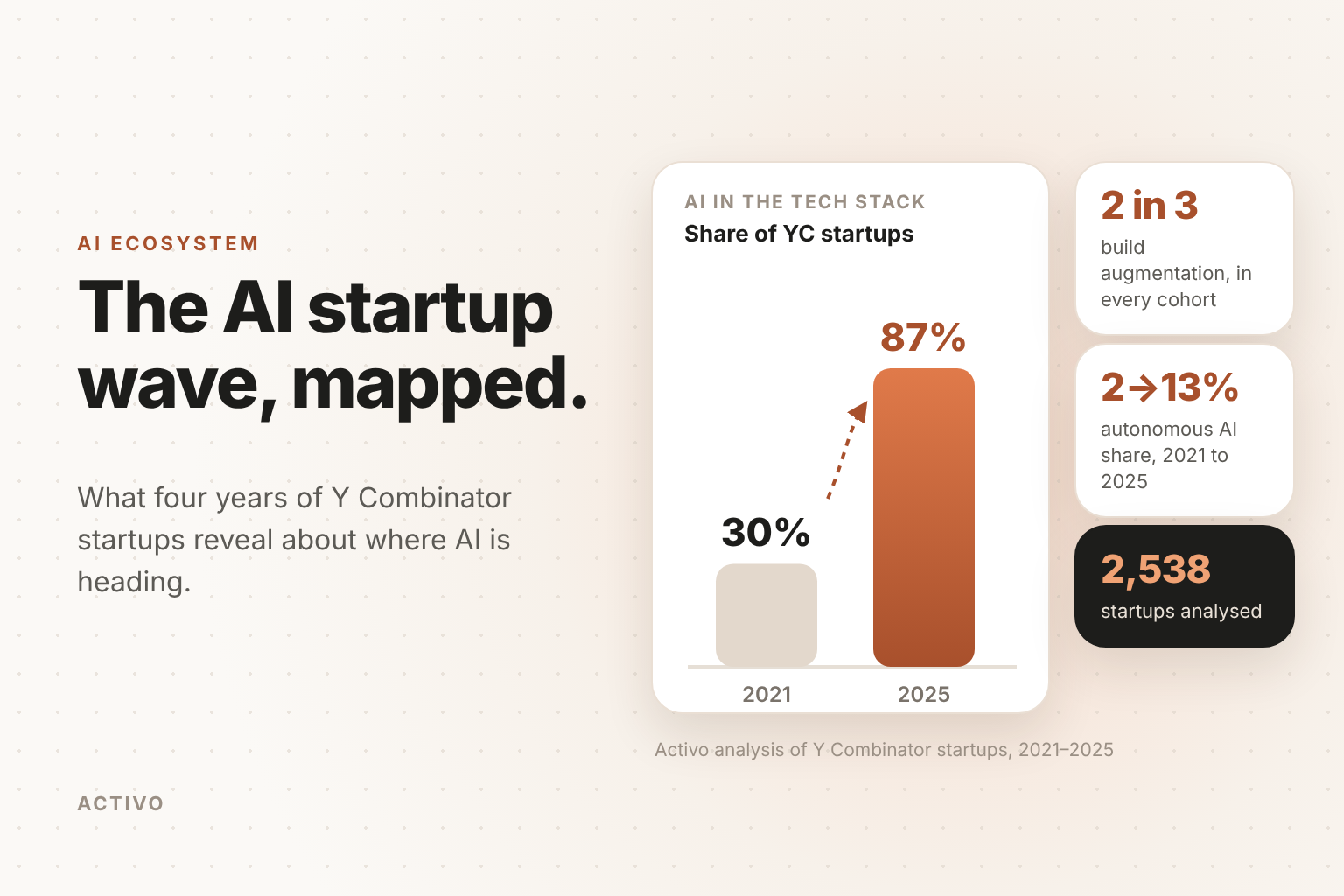
The wave of startups building propositions on top of AI keeps growing. To see how, we analysed every startup Y Combinator backed between 2021 and 2025: 2,538 companies from 67 countries (64% in the US) across 40 industries. For each one we recorded its primary AI proposition (automation, augmentation, autonomous or other), how much its technology depends on AI, its platform model and its revenue model. Updated October 2026 with the latest investment and adoption data.
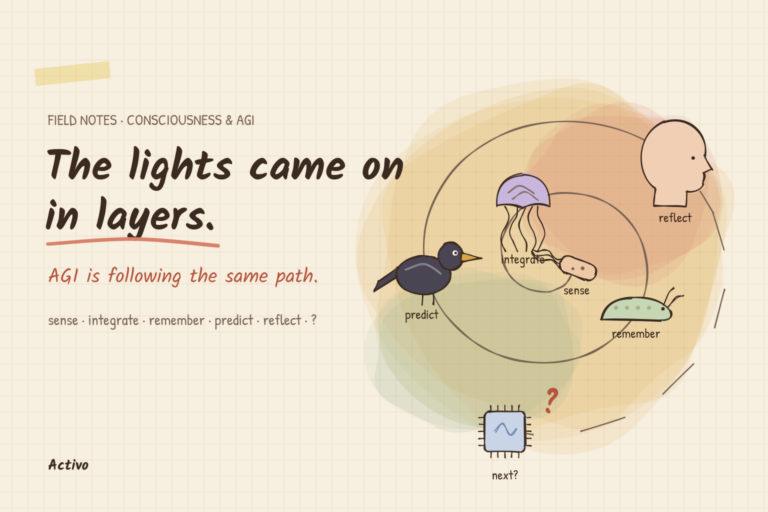
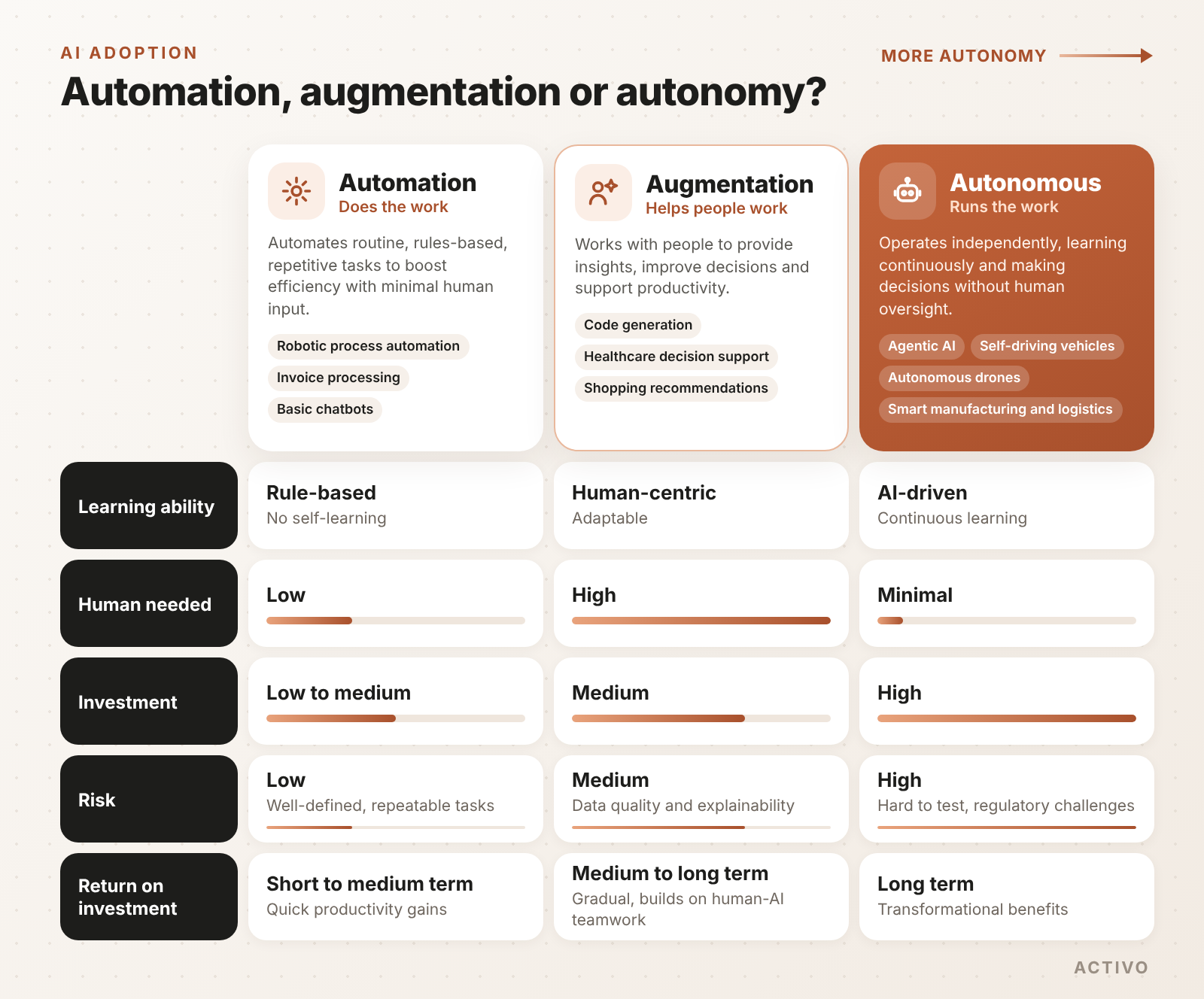
AI propositions fall into three groups. Automation takes over routine, rules-based tasks for quick, low-risk productivity gains. Augmentation works alongside people to improve decisions, which needs more human input but builds value through human-AI teamwork. Autonomous AI runs the work on its own and keeps learning, with the highest investment and risk but the biggest long-term upside.
What changed in four years of YC startups
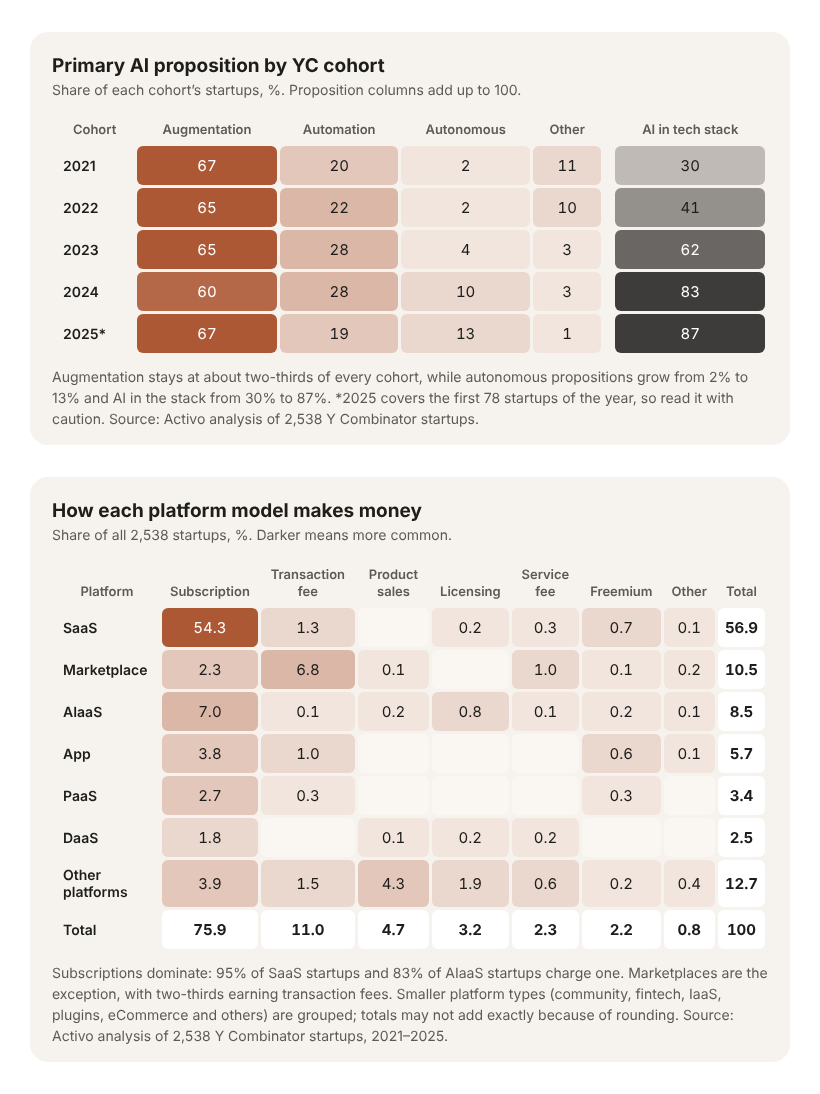
- AI is now the default stack. 87% of startups use AI in their technology, up from 30% in 2021. Non-AI propositions have fallen below 2%.
- Augmentation still dominates. Augmentation (65%) and automation (19%) are holding their share. Productivity tools across both make up a quarter of all startups.
- Autonomous is the big mover. Agents that act on their own rose from 2% to over 12% of propositions: the riskier, longer-term bet is attracting serious backing.
- AI-as-a-service is emerging. AIaaS platforms grew from 1% to 8%. SaaS is under pressure but holding at 57%, with marketplaces next at 10%.
- Subscriptions still rule revenue. 75% of startups charge subscriptions, rising to 83% for AIaaS. Transaction fees, at 11%, are the main alternative.
The wider picture in 2026
The money has followed. Stanford’s 2026 AI Index puts AI investment in US companies at $285.9bn in 2025, more than ten times Europe and over 20 times China. Large incumbents are pouring capital into infrastructure and foundation models, but smaller startups can still win, and even dominate, specific segments.
Adoption is no longer the problem; value is. McKinsey’s November 2025 survey found that 88% of organisations use AI regularly in at least one function and 62% are at least experimenting with AI agents, but only 23% are scaling an agent and just 39% report any impact on profit. That gap between use and measurable results is the opening for startups that can prove outcomes.
2026: more money, in fewer hands
The funding wave has grown again. Crunchbase counted $202bn of venture investment in AI companies in 2025, up more than 75% on the $114bn of 2024, taking AI from 34% of all global venture funding to close to half. By the third quarter of 2026 the share had reached 64%: $102bn of a record $159bn quarter, which included 27 rounds of $1bn or more.
Most of that money goes to very few companies. OpenAI and Anthropic alone took 14% of all global venture investment in 2025. For a startup building on top of their models, that is a mixed blessing. The infrastructure keeps getting better and cheaper, but the labs ship features that can wipe out a thin product overnight, and investors know it. The bar for an application-layer company is no longer “uses AI”. It is “owns a workflow, data or a customer relationship the labs cannot easily take”.
The economics are improving, but they are not SaaS yet
ICONIQ’s 2026 State of AI survey of more than 300 executives at companies building AI products shows how the business model is maturing. AI products are becoming a bigger part of revenue, and margins are rising as model costs fall, but they still sit well below the 75% to 80% gross margins that classic SaaS investors are used to.
| Benchmark | Late 2025 | 2026 | What it means for you |
|---|---|---|---|
| Gross margin on AI products | 45% | 53% (expected) | Model and inference costs are real. Price for them from day one. |
| AI products as a share of revenue | 32% | 42% (expected) | Buyers are paying for AI, not just trialling it. |
| Companies using consumption pricing | 35% | 42% | Usage pricing is overtaking flat seats for AI features. |
| Companies using outcome pricing | 18% | 23% | Charging for results is moving from experiment to mainstream. |
The 2026 margin and revenue figures are the companies’ own forecasts; the pricing figures compare surveys taken six months apart, and most companies blend more than one pricing model. Agents also still need people. Almost half of the companies surveyed say their agents need a human to step in on at least 30% of tasks, and average productivity gains from agents are below 30%. That fits our YC data: autonomy is growing fast, but augmentation, with a person in the loop, still pays the bills.
What it means for your proposition
| Proposition | What it does | Typical pricing | Main risk |
|---|---|---|---|
| Augmentation | Helps people decide and work faster; the human stays in control. | Per seat, or seats plus usage credits | Easy to copy; value is hard to attribute |
| Automation | Runs defined, repeatable tasks end to end. | Usage-based or per task | Commoditisation as model costs fall |
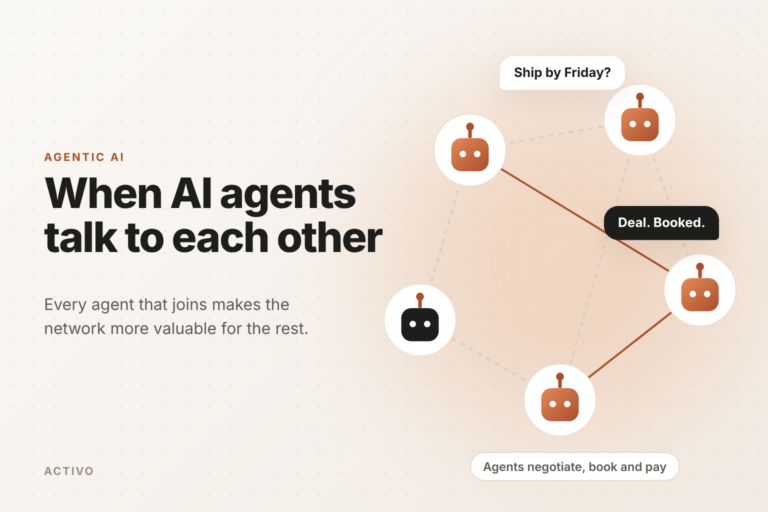
| Autonomous | Agents plan and act towards goals with limited supervision. | Outcome-based, such as per resolved case | Trust, safety and liability |
A five-step plan for AI founders
- Name your proposition. Decide whether you are augmenting, automating or acting autonomously. Mixed messages confuse buyers and investors.
- Match your revenue model to it. Subscriptions suit augmentation; usage or task pricing suits automation; outcome pricing suits autonomy. Don’t default to per-seat because everyone else does.
- Draw the human line. Define exactly where a person reviews, approves or takes over. It is the first question enterprise buyers will ask.
- Prove profit impact within 90 days. With only 39% of organisations seeing any profit impact, a dashboard that shows time saved or money made is your strongest sales tool.
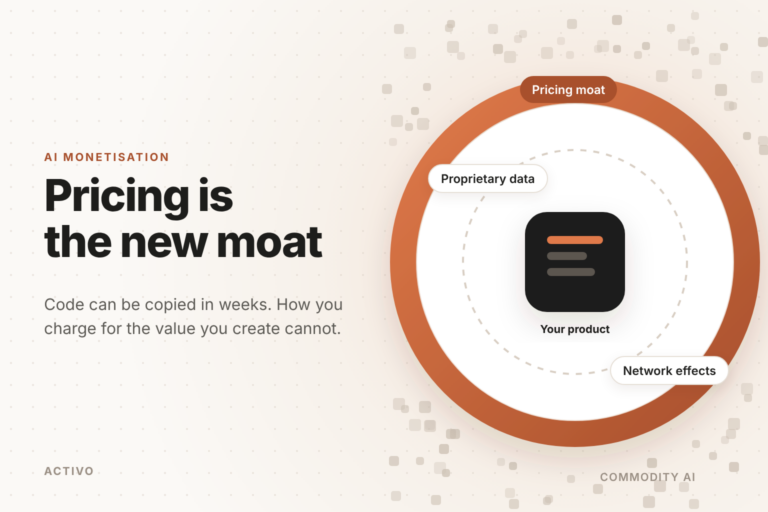
- Build a moat beyond the model. Proprietary data loops, deep workflow embedding and the trust that comes from reliable operation, so you survive the next model release.
Four signals to watch for the rest of 2026
- Agent reliability. The share of tasks an agent finishes without a human is the number that unlocks outcome pricing. Track it for your own product every month.
- Model prices. Every fall in the cost of a capable model lifts gross margins for startups that keep part of the saving, and erodes any moat built on simply being cheaper.
- Capital concentration. With most venture money flowing to a handful of labs, application startups that reach real revenue on modest rounds will negotiate from strength.
- Buyer proof. With only 39% of organisations seeing any profit impact from AI, case studies with hard numbers will close deals faster than any demo.
Where application startups can still win
None of this means the game is over for smaller players. Our YC data shows where founders are placing their bets, and the 2026 numbers suggest which of those bets are most likely to pay off.
Stronger ground
- Regulated, workflow-heavy sectors such as healthcare, legal, finance and insurance, where trust and integration take years to build.
- Products that own a proprietary data loop, so every new customer makes the product better for the rest.
- Agents priced per outcome, where the customer can see the money saved each month.
- Vertical tools that replace outsourced services, not just software seats.
Weaker ground
- Thin wrappers that add a prompt and an interface to someone else’s model.
- Horizontal assistants competing head-on with features the labs give away for free.
- Per-seat pricing for products whose whole value comes from replacing seats.
- Moats built on being cheaper, which the next model release removes.
The pattern is consistent. The closer a startup sits to a specific workflow, a specific buyer and a measurable result, the less it depends on the model underneath, and the more of the value it keeps.
If you are raising in 2026, lead with that position. Show the workflow you own, the outcome you deliver and the share of tasks your product completes without help. Those three numbers now say more about an AI startup than the model it uses or the size of its last round.
Y Combinator is betting big on AI. Augmentation remains the favoured approach for now, but autonomous systems and AI-as-a-service are rising fast, and they will reshape business models and how people are managed. The winners will be the startups that turn AI usage into results customers can see.
Moving from automation to augmentation to autonomy? We design, build and run AI agents for your business, grounded in your own data. Explore AI Models & Agents →
We help founders position their AI product, choose the right pricing model and prove impact fast.
Get in touchSources: Y Combinator company directory (Activo analysis); Stanford HAI, AI Index Report 2026; McKinsey, The state of AI in 2025; Crunchbase, 2025 year-end funding review; Crunchbase, Q3 2026 global funding; ICONIQ, 2026 State of AI: The Builder’s Economy.